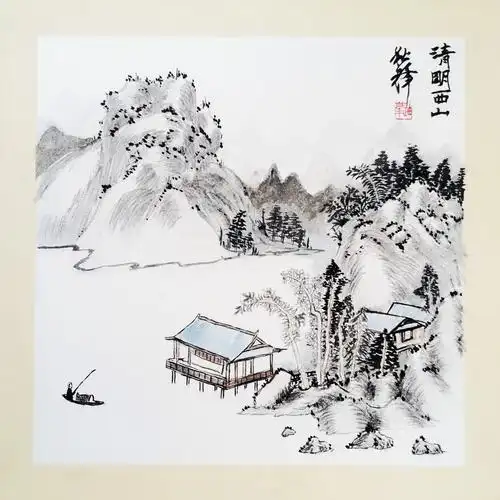
Chinese calligraphy is one of the most distinctive forms of traditional Chinese art. Using Chinese characters as its medium and the brush as its tool, it transforms lines and strokes into expressions of rhythm, harmony, and spirit. With a history spanning thousands of years, calligraphy is more than writing—it is a reflection of Chinese philosophy, culture, and aesthetics.
From the earliest Oracle Bone Script to the refined forms of Clerical, Regular, Running, and Cursive scripts, each stage of its evolution reflects the values and artistic ideals of its time. These styles are not only functional systems of writing but also mirrors of history and society.
Great masters have shaped the legacy of calligraphy. Wang Xizhi, the “Sage of Calligraphy,” brought fluid elegance to Running Script with his masterpiece Preface to the Orchid Pavilion. Yan Zhenqing, a Tang dynasty master, developed a bold and dignified style that conveyed both strength and moral character. Other figures such as Liu Gongquan, Ouyang Xun, Mi Fu, and Zhao Mengfu enriched the tradition with their unique contributions, ensuring its vitality across centuries.
The essence of Chinese calligraphy lies not only in the beauty of form but also in its spirit. Each stroke embodies balance, movement, and emotion, guided by ideals such as harmony between man and nature and the vitality of life force. To practice calligraphy is to cultivate patience, mindfulness, and a deep connection to cultural heritage.
Today, Chinese calligraphy continues to inspire worldwide. It is recognized not only as an art form but also as a profound cultural treasure that bridges history and modernity. Preserving and sharing this tradition means carrying forward the wisdom, values, and aesthetic spirit of Chinese civilization.
✨ Discover the elegance and depth of Chinese calligraphy—where art, philosophy, and culture meet in every stroke.